Most businesses are not short on data. They are short on clarity. Spreadsheets get emailed around, reports arrive too late to act on, and leadership ends up making decisions based on information that was accurate last Tuesday. Custom dashboards change that dynamic entirely — and when AI is layered into them, the gap between raw data and real decisions closes significantly.
An Experience Built Around the User
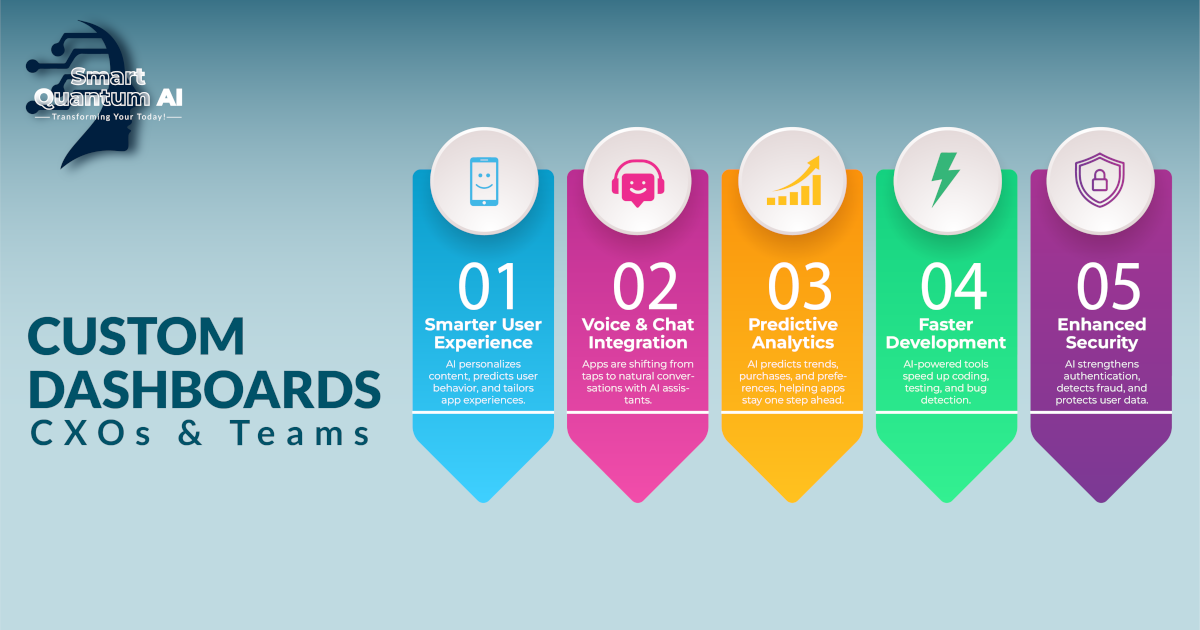
Generic dashboards show everyone the same view. Custom dashboards show each person what they actually need. AI takes this further by learning from usage patterns — surfacing the metrics a user checks most, flagging anomalies before they are manually noticed, and adjusting what is shown based on context. For a CXO reviewing company performance, this means less time hunting for numbers and more time acting on them.
Conversations Instead of Clicks
The way people interact with software is shifting. Voice commands and chat-based interfaces are moving from consumer apps into business tools, and dashboards are no exception. Rather than navigating menus to pull a specific report, a team member can simply ask — and get an answer. This removes friction for non-technical users and makes the dashboard genuinely accessible to the whole team, not just the people who built it.
Knowing What Comes Next
Reporting tells you what happened. Predictive analytics tells you what is likely to happen. For teams managing sales pipelines, inventory, or customer retention, this distinction matters enormously. AI-powered dashboards can identify patterns in historical data and surface early signals — a product category showing declining engagement, a client segment with unusual churn risk, a procurement cycle running behind schedule. Acting on those signals early is far less costly than responding after the fact.
Building Faster, Breaking Less
Custom dashboards used to mean long development cycles and expensive maintenance. AI-assisted development has compressed both. Tools that generate code from specifications, flag bugs before they reach production, and automate repetitive testing steps have made it significantly more practical for businesses to commission dashboards that are actually tailored to their workflows rather than settling for off-the-shelf solutions.
Security That Keeps Pace
A dashboard connected to live business data is only as valuable as it is secure. AI strengthens this layer by moving beyond static passwords and permission settings — monitoring access patterns, flagging unusual behaviour, and detecting potential fraud in real time. For CXOs handling sensitive financial or operational data, this is not a nice-to-have.
What This Looks Like in Practice
At Smart Quantum AI, we build custom dashboards for leadership teams and operational units that need more than a generic analytics tool. If your team is spending more time compiling reports than reading them, that is usually the clearest sign that a better solution exists.