There is a version of this conversation that is all buzzwords — AI-powered, intelligent, next-generation. This is not that version. The shift toward AI in application development is real, measurable, and increasingly the difference between products that retain users and products that do not. The question for most teams is no longer whether to integrate AI, but where to start.
Turning a Basic App Into an Intelligent Tool
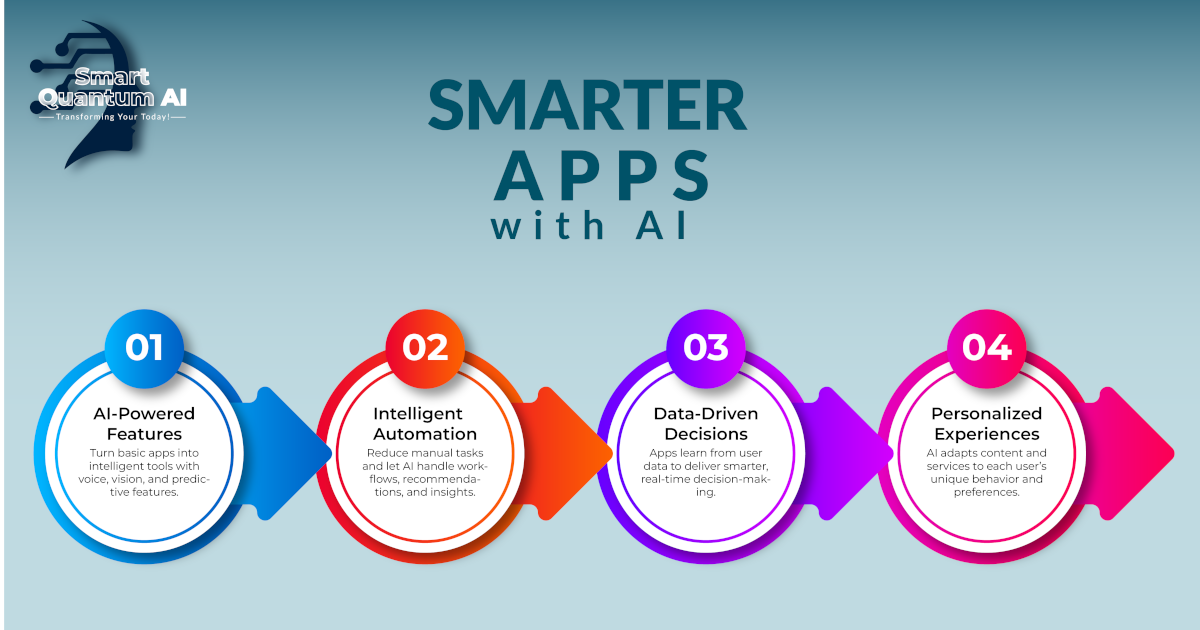
Most apps today do exactly what they are told. A user taps a button, something happens. That model works, but it has a ceiling. AI-powered features push past that ceiling by giving applications the ability to listen, see, and anticipate. Voice interfaces remove the need to navigate. Computer vision enables apps to interpret images and environments. Predictive features surface what a user needs before they ask for it. The result is an application that feels less like software and more like a capable assistant.
Letting Automation Handle the Repetitive Work
Every application has workflows that nobody enjoys — data entry, status updates, routing requests to the right person, generating the same report every Monday morning. These are not complex problems, but they consume real time across teams. Intelligent automation handles them quietly in the background, freeing users to focus on the work that actually requires their judgment. Beyond simple task automation, AI can also generate recommendations and surface insights that would otherwise require manual analysis to uncover.
Making Decisions in Real Time
Static applications respond to input. Smart applications learn from it. When an app tracks how users interact with it — what they click, what they ignore, where they drop off — that data becomes a feedback loop. Over time, the application gets better at predicting what a user needs and surfaces the right information at the right moment. For businesses, this means decisions that are grounded in current behaviour rather than last quarter's assumptions.
An Experience That Fits Each User
Generic works at scale, but it rarely delights. AI-driven personalisation allows applications to adapt — showing different content, adjusting interface priorities, and modifying recommendations based on what each individual user actually does. This is not about surveillance; it is about relevance. Users stay longer, engage more, and return more often when an application feels like it understands them.
Building It the Right Way
At Smart Quantum AI, we help businesses integrate these capabilities into their web and mobile applications without overcomplicating the build. The goal is always a product that solves a real problem better than the version without AI — not AI for its own sake.